Grocery · Tool and printable
Price per unit calculator and price book
Quick answer
Put both packages in the same unit, then divide the price by the size. A 5 lb bag of rice at $6.49 is 80 oz, so it costs $0.081 an ounce ($1.30 a pound). A 2 lb bag at $2.99 comes to $0.093 an ounce, 15.2% more. A pound is 16 ounces.
Source: NIST Handbook 44 (2026), Appendix C, checked October 10, 2026.
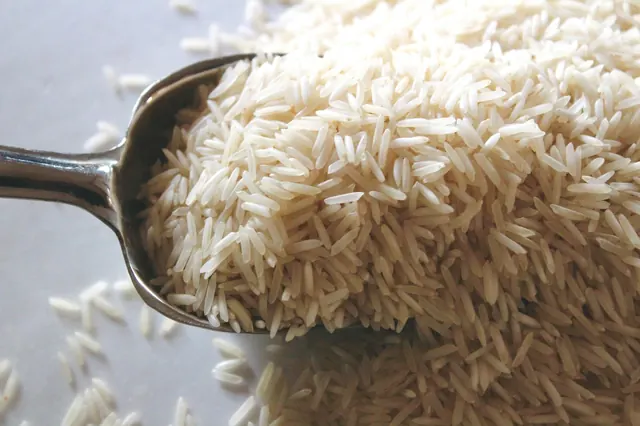
Try it
Filled in with the worked example below. Change any number and the result updates.
Best buy 5 lb bag, $0.081 per oz ($1.30 per lb)
The next cheapest, 2 lb bag, costs 15.2% more per oz. It would have to drop to $2.60 to tie.
| Rank | Item | Price | Size | Per oz | Per lb | Compared with the best | Price to tie |
|---|---|---|---|---|---|---|---|
| 1 | 5 lb bag | $6.49 | 5 lb | $0.081 | $1.30 | Best buy | |
| 2 | 2 lb bag | $2.99 | 2 lb | $0.093 | $1.50 | 15.2% more | $2.60 |
| 3 | 3 pouches | $5.00 | 3 × 14 oz | $0.119 | $1.90 | 46.7% more | $3.41 |
Your price book page
Write down the store, the date and the unit price on each trip. After a few weeks you can tell a real sale from a normal price.
| Item | Store | Date | Size | Price | Per oz | Sale? |
|---|---|---|---|---|---|---|
| 5 lb bag | 5 lb | $6.49 | $0.081 | |||
| 2 lb bag | 2 lb | $2.99 | $0.093 | |||
| 3 pouches | 3 × 14 oz | $5.00 | $0.119 | |||
Step by step, no jargon
How to use this, in plain words
- 1
Find the price and the size of each package. The size is the small print on the front, such as "NET WT" in pounds or ounces.
- 2
Check the shelf tags first. The unit price is the small figure in a corner box, ending in /oz, /lb or /ct. If both tags use the same unit, the lower one wins and you're done.
- 3
Type each one in. For a multi-pack or a 2-for deal, enter the deal price, the size of one package and how many you get.
- 4
Read the unit price of each. The lowest is the cheapest by the ounce, pound or item.
- 5
Write the winner in your price book with the store and the date. Next time you'll know a real sale when you see one.
Before you start
- Compare like with like: weight with weight, volume with volume. A jar sold in ounces and a bottle sold in fluid ounces can't be ranked against each other.
- Shelf tags already show a unit price, but two tags on the same shelf can use different units, such as per ounce and per pound.
- A lower unit price saves money only if you use it all. If part of a big pack goes to waste, enter only the amount you'll use.
- Read the size on the label, not the size of the box. Packages that look alike can hold different amounts.
The method
How it works
- Convert each package to one unit: ounces for weight, fluid ounces for volume, or items for a count. A pound is 16 ounces, a quart is 32 fluid ounces and a gallon is 128 fluid ounces.
- Multiply by the number of packages the price buys, for a 3-pack or a 2-for deal.
- Divide the price by the total amount. That is the unit price, and the lowest one is the best buy.
- For every other item, divide its unit price by the best one to see how much more it costs, and multiply the best unit price by its size to get the price it would need to tie.
- Metric: 100 g is 3.527 oz and 1 liter is 33.814 fl oz, so the tool also shows the price per 100 g and per liter.
Source: NIST Handbook 44 (2026), Appendix C, checked October 10, 2026.
Step by step
Worked example
Three bags of long-grain white rice on one shelf: a 2 lb bag for $2.99, a 5 lb bag for $6.49 and a 3-pack of 14 oz pouches for $5.00. These are example prices, not survey data.
- Put every package in the same unit: 2 lb bag is 2 lb = 32 oz; 5 lb bag is 5 lb = 80 oz; 3 pouches is 3 × 14 oz = 42 oz.
- Divide each price by its size: $2.99 ÷ 32 = $0.093 per oz; $6.49 ÷ 80 = $0.081 per oz; $5.00 ÷ 42 = $0.119 per oz.
- The lowest is the 5 lb bag at $0.081 per oz, or $1.30 per lb (× 16).
- 2 lb bag: $0.093 is 15.2% above $0.081. To tie, it would have to cost $0.0811 × 32 = $2.60 instead of $2.99.
- 3 pouches: $0.119 is 46.7% above $0.081. To tie, it would have to cost $0.0811 × 42 = $3.41 instead of $5.00.
Figure
Put it on the fridge
What to record
Your household
Variants
Multi-packs and 2-for deals
A 3-pack of 14 oz pouches for $5.00 is 42 oz, so $5.00 ÷ 42 = $0.119 an ounce. Enter the deal price, the size of one package and the number of packages.
Like with like
Price a jar sold by weight only against other packages sold by weight. Fluid ounces measure volume, so the tool won't rank a weight against a volume.
Count only what you'll use
If part of a big package usually ends up in the trash, enter only the part you expect to use as the size. A 5 lb bag at $6.49, if you use only 3 lb of it, works out to $2.16 a pound. That is more than the 2 lb bag at $1.50 a pound.
Metric shelf tags
Switch to Metric to see the price per 100 g and per kg, or per 100 mL and per liter. The 5 lb bag works out to $0.286 per 100 g.
Source: NIST Handbook 44 (2026), Appendix C, checked October 10, 2026.
Published figures
Numbers this tool uses
| Figure | Value | Source, date checked |
|---|---|---|
| 1 pound | 16 ounces = 453.59237 g | NIST Handbook 44 (2026), Appendix C, October 10, 2026 |
| 1 ounce (avoirdupois) | 28.349523125 g | NIST Handbook 44 (2026), Appendix C, October 10, 2026 |
| 1 US fluid ounce | 29.57353 mL | NIST Handbook 44 (2026), Appendix C, October 10, 2026 |
| Pint, quart, gallon | 16, 32 and 128 US fluid ounces | NIST Handbook 44 (2026), Appendix C, October 10, 2026 |
Limitations
- Planning estimate; check the shelf tag and your receipt. Stores round unit prices and sometimes quote different units for similar products, so a tag can differ slightly from this tool's figure.
- The lowest unit price only saves money if you use what you buy. Waste, storage space and extra trips aren't in the arithmetic.
- Numbers only. The tool compares the prices you type in. It doesn't collect store prices or recommend brands.
Checking the result
If the answer surprises you
Your number is a cent off the shelf tag? Stores round unit prices, and some tags show more decimals than others.
The tool won't rank one item? You mixed a weight and a volume. Compare it only with items sold the same way.
The big size lost? A sale on the smaller size, or a multi-pack priced higher per ounce, can beat the bulk bag.
Asked often
Questions
How do you calculate price per ounce?
Divide the price by the number of ounces. A 2 lb bag is 32 oz, so at $2.99 it costs $2.99 ÷ 32 = $0.093 an ounce. If the size is in pounds, multiply by 16 first.
Source: NIST Handbook 44 (2026), Appendix C, checked October 10, 2026.
Is the bigger package always cheaper per unit?
Not always. A sale on the smaller size can beat the big one, and a multi-pack can cost more per ounce than a single package. Check the unit price each time.
Can I compare ounces and fluid ounces?
Not directly. An ounce is a weight and a fluid ounce is a volume, and how much a fluid ounce weighs depends on the food. Compare items sold the same way. NIST defines 1 US fluid ounce as 29.57353 mL.
Source: NIST Handbook 44 (2026), Appendix C, checked October 10, 2026.
How do I compare a 2 for $5 deal?
Enter $5.00 as the price, the size of one package and 2 as the number of packages. Two 12 oz boxes come to 24 oz, so the deal works out to $0.208 an ounce.
What is a price book?
A list of the items you buy often, with the unit price you paid at each store and the date. After a few weeks it shows what a normal price is for each item, so you can tell a real sale from a small markdown.
Read next
Guides that go deeper
 Practical note · 5 min readSame product, fair test: match sizes, brands and prices before you compare storesA store comparison is only as fair as its items. Match brand, cut, size and regular price first, or a $2 gap can look like $20. Printable checklist.Read the guide
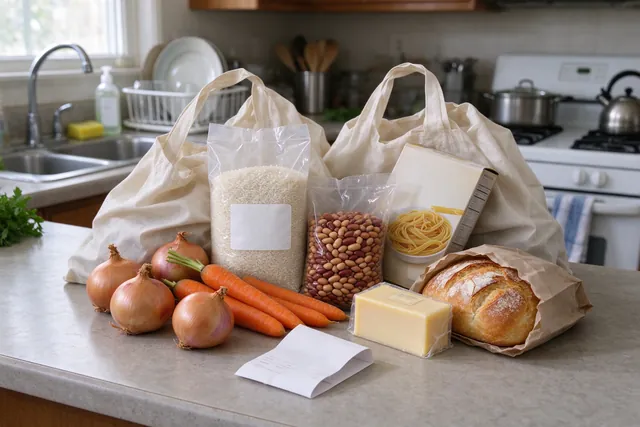 Know-how · 5 min readUnit price: how to compare sizes in the store in 10 secondsRead the unit price on the shelf tag, fix mismatched units in your head, and spot when the bigger package loses. Includes a pocket card to print.Read the guide
 Practical note · 5 min readStarting a price book: what to write down for the first four weeksA price book lists what your regular groceries cost, by unit price. Here's what to record each week so that after a month you know a good price on sight.Read the guide
 Problem-solving guide · 6 min readGrocery bill keeps creeping up: a weekly routine that worksWhy grocery totals drift up week after week, and a short weekly routine to catch it: plan dinners, shop the pantry, buy from one list, log the receipt.Read the guide
 Problem guide · 6 min readIs the bulk size really cheaper? When the big bag losesThe big bag has the lower unit price, but you pay for the whole bag. Work out how much you must use for it to win, and spot sales and multi-packs that flip it.Read the guide
 Know-how · 5 min readOne grocery store or two: how to tell when a second stop is worth itA second store can shave dollars off the list, but it costs trips, minutes and miles. Work out the saving per stop, per mile and per hour, then decide.Read the guide
The whole job
Systems that use this tool
This tool is one part of a finished routine. The system page puts it in order with the other steps.
 SystemHolidays and gatherings · 7 steps · free printableFriendsgiving and potluck sign-up: who brings what, and how muchRun a Friendsgiving or potluck from one sign-up sheet: slots in fill order, every dish sized to the headcount, turkey math and heat needs. Free printable.Open the system
 SystemHolidays and gatherings · 7 steps · free printableHalloween week dinners: fed and out the door before darkPlan Halloween week so dinner is eaten before trick-or-treating: cook earlier in the week, make the 31st an assemble night, shop once. Free printable.Open the system
 SystemShopping and budget · 6 steps · free printableThe monthly grocery budget, checked once a weekStart from the USDA Food Plans figure for your household, split it into weekly checkpoints, log every receipt and review the month. Free printable.Open the system
 SystemShopping and budget · 7 steps · free printableShop your own shelves before the storeWrite the week's list, check the pantry, fridge and freezer against it, and buy only the gap in whole packages, grouped by aisle. Free printable check list.Open the system
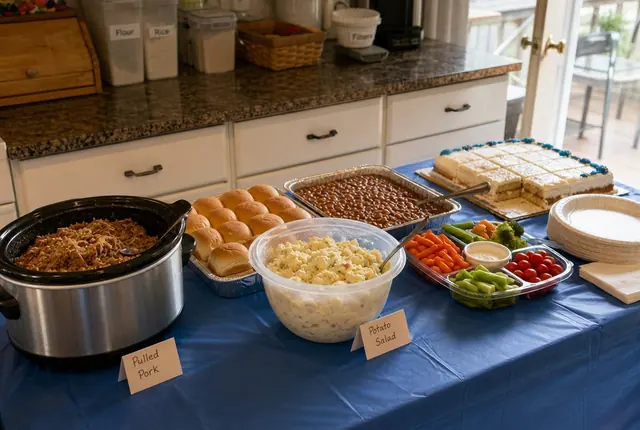 SystemHolidays and gatherings · 7 steps · free printableParty food quantities: how much to make per guest, and the list it turns intoHow much food for a party: plan 1 to 1½ pounds per guest, count 60% of invites for an open house, then turn ounces per guest into a list. Free printable.Open the system
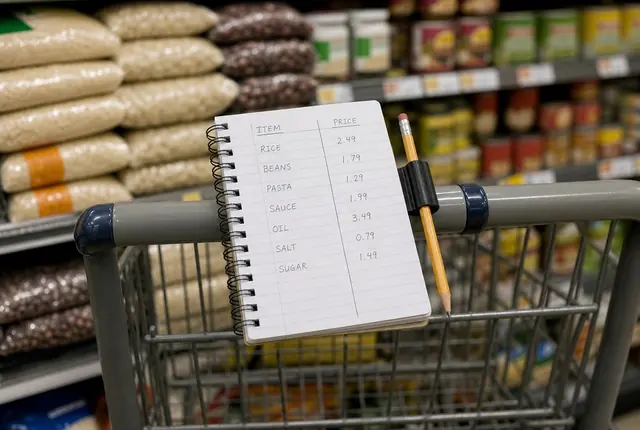 SystemShopping and budget · 7 steps · free printableThe grocery price book: know a good price before you reach the shelfWrite down the unit price of your 20 most-bought groceries for four weeks, circle the lowest, and stock up only when a tag matches it. Free printable page.Open the system
 SystemHolidays and gatherings · 8 steps · free printableThanksgiving dinner plan: from headcount to the last dishPlan Thanksgiving dinner in order: headcount, turkey size per person, who brings what, two shopping trips and an oven plan. Free printable working copy.Open the system
Keep planning
Related tools
- GroceryStore comparison worksheetPrice your monthly staples at up to three stores and see the cheapest store, the cheapest way to split the list, and whether a club fee pays off.Open the tool
- GroceryMonthly grocery trackerLog each grocery receipt, keep non-food items apart, and see what's left per day and per week. Weekly checkpoints and a printable receipt log.Open the tool
- ScaleCost per serving calculatorPrice each ingredient from the package it comes in, add the lines and divide by the servings. Rice by the cup from a 5 lb bag works too. Print the cost card.Open the tool
- ScaleCups to grams converterTurn a recipe's cups and spoons into grams, or grams back into cups, for 53 ingredients from USDA data. Weigh it all into one bowl and print a weights card.Open the tool
- GroceryGrocery budget calculatorWork out a weekly and monthly grocery budget for your household from the USDA Food Plans cost tables, then print a monthly spending tracker.Open the tool
- PlanWeekly dinner plan generatorPlan seven dinners as cook, leftover, assemble and flex nights, rotate four dish types, and print the week with a grocery list by store section.Open the tool
- ScalePortion scaler with unit conversionScale a recipe up or down by servings or by pan size, see each amount in cups, tablespoons and grams, and print the scaled recipe card.Open the tool
- PlanFour-night rotation builderPin four theme nights to fixed days, list your own versions of each, and print a rotation card that shows when every dinner comes back.Open the tool
- GroceryPantry-first grocery listList what the week's dinners need, enter what's already on the shelf, and get a store list of only the gap, rounded up to whole packages.Open the tool
- FreezerPantry inventory and restock listCount the pantry shelf by shelf, set a restock point and a full level for each staple, and print the inventory with a restock list sorted by zone.Open the tool
Checked and dated
Sources
- NIST Handbook 44, 2026 edition, Appendix C: General Tables of Units of Measurement, National Institute of Standards and Technology. Checked October 10, 2026.
See every source on the site on the sources page. Spotted an error? Tell us.