Freezer · Tool and printable
Pantry inventory and restock list
Quick answer
Count each staple in whole packages. Give each line two numbers: a restock point (when the count drops to it, buy more) and a full level. Anything at or below its restock point goes on the list, and you buy the full level minus what you have. In the worked example, 12 lines hold 22 packages; 2 are out, 5 are low, and the restock list is 15 packages.
Source: no outside figures. This tool works only from what you enter.
Try it
Filled in with the worked example below. Change any number and the result updates.
Your restock list 7 lines of 12, 15 packages to buy. 5 lines are still above the restock point.
- Out
- 2
- Low
- 5
- On the shelf now
- 22 packages of 38 when full
Restock list, by pantry zone
- BakingFlour: buy 1 bag (have 1, stock to 2)
- Cans, jars and cartonsCanned tomatoes: buy 5 cans (have 3, stock to 8)Chicken broth: buy 4 cartons (out, stock to 4)
- Pasta, rice and grainsSpaghetti: buy 2 boxes (have 2, stock to 4)
- Breakfast and snacksOats: buy 1 canister (have 1, stock to 2)
- Oils, sauces and condimentsOlive oil: buy 1 bottle (have 1, stock to 2)
- Spices and seasoningsCumin: buy 1 jar (out, stock to 1)
Use first, earliest printed date at the top
- CrackersDec 15, 2026
- FlourJan 15, 2027
- OatsFeb 10, 2027
- Olive oilMay 20, 2027
- Canned tomatoesAug 31, 2027
- Black beansMar 1, 2028
The inventory, shelf by shelf
| Item | On hand | Restock at | Stock to | Status | Buy | Printed date |
|---|---|---|---|---|---|---|
| Flour Baking | 1 bag | 1 | 2 | Low | 1 | Jan 15, 2027 |
| Sugar Baking | 2 bags | 1 | 2 | Stocked | none | not entered |
| Canned tomatoes Cans, jars and cartons | 3 cans | 4 | 8 | Low | 5 | Aug 31, 2027 |
| Black beans Cans, jars and cartons | 6 cans | 3 | 6 | Stocked | none | Mar 1, 2028 |
| Chicken broth Cans, jars and cartons | 0 cartons | 2 | 4 | Out | 4 | not entered |
| Spaghetti Pasta, rice and grains | 2 boxes | 2 | 4 | Low | 2 | not entered |
| Rice Pasta, rice and grains | 2 bags | 1 | 2 | Stocked | none | not entered |
| Oats Breakfast and snacks | 1 canister | 1 | 2 | Low | 1 | Feb 10, 2027 |
| Crackers Breakfast and snacks | 3 boxes | 2 | 4 | Stocked | none | Dec 15, 2026 |
| Olive oil Oils, sauces and condiments | 1 bottle | 1 | 2 | Low | 1 | May 20, 2027 |
| Soy sauce Oils, sauces and condiments | 1 bottle | 0 | 1 | Stocked | none | not entered |
| Cumin Spices and seasonings | 0 jars | 0 | 1 | Out | 1 | not entered |
Step by step, no jargon
How to use this, in plain words
- 1
Write down the staples you always want in the house. Skip one-off items for a single recipe; those go on the weekly list.
- 2
Count one shelf at a time, in whole packages. An opened bag counts as one, so long as there's enough left to cook with.
- 3
Set the full level: how many of it you want on the shelf after a shop. Then set the restock point, the count that means buy more.
- 4
If a package has a date printed on it, copy it in. Those lines show up in a use-first list, so you can move them to the front of the shelf.
- 5
Print the inventory and restock list. Take the list to the store, then tape the inventory inside the pantry door for next time.
Before you start
- Count right before you write the grocery list, not the day after a big shop. Otherwise everything reads as stocked and the list comes out empty.
- Keep the staples list short to begin with. You can add lines later, and a short list gets counted.
- Use the same package every time. If you sometimes buy the big can and sometimes the small one, write the size in the item name.
- Set the restock point high enough to get you to the next shop. Something you use twice a week needs a higher point than something you use once a month.
The method
How it works
- Status: out when on hand = 0, low when on hand ≤ restock at, stocked when on hand > restock at.
- Buy = stock to − on hand, for every line that is out or low. Stocked lines buy nothing, even if they sit below the full level.
- Restock at left empty counts as 0, so that line goes on the list only when you run out.
- The restock list is grouped by pantry zone in shelf order: baking, cans and cartons, grains, breakfast, condiments, spices, other.
- Use first: lines with a printed date, sorted earliest date first. Lines with no date stay off that list.
Step by step
Worked example
A family keeps a short list of staples they always want on the shelf. On a Thursday night before the weekend shop, they count 12 of them, shelf by shelf, and note the date printed on six packages.
- Count every staple in whole packages, one line each: 12 lines, 22 packages on the shelf.
- Compare each count with its restock point. Flour: 1 on hand, restock at 1, so it goes on the list. Sugar: 2 on hand, restock at 1, so it stays off.
- Buy = stock to − on hand. Flour 2 − 1 = 1; Canned tomatoes 8 − 3 = 5; Chicken broth 4 − 0 = 4.
- 2 lines are out and 5 are low: 7 lines to restock. 1 + 5 + 4 + 2 + 1 + 1 + 1 = 15 packages to buy.
- 6 lines have a printed date. Sorted earliest first, Crackers (Dec 15, 2026) goes to the front of the shelf.
Figure
Put it on the fridge
What to record
Your household
Variants
Small apartment pantry
With one cupboard, set most full levels to one or two packages. The list stays short, and the restock point tells you when to buy before you run out.
Holiday baking shelf
From November, add a baking zone with flour, sugar, butter and the spices you bake with. Raise their full levels for the season and lower them again in January.
Bulk buyer
If you buy big packages, put the size in the item name (rice, big bag) so every count uses the same package. A half-empty bag still counts as one, so set its restock point to one and the next bag goes on the list before this one runs out.
Shared house
Keep one sheet for shared staples on the pantry door and let anyone tick a line when they open the last package. The person shopping that week uses the list.
Limitations
- Planning estimate; check the shelf itself before you shop, since the list is only as good as the last count.
- The levels are your own choices. The tool doesn't know how fast your household goes through anything; adjust the restock points after a month.
- The printed date only sorts a use-first list. We don't say what a package date means or how long food keeps. For that, use the USDA FoodKeeper app and FoodSafety.gov.
Checking the result
If the answer surprises you
A line sits below its full level but isn't on the list? It's still above its restock point. Lower the full level or raise the restock point if you want it bought sooner.
The restock list is longer than you expected? A first count often catches several staples that ran out a while ago. Once those are back on the shelf, later lists only carry what you used since the last count.
A line got skipped? The restock point has to be lower than the full level, and every count has to be a whole number.
Asked often
Questions
How do I make a pantry inventory?
List the staples you always want on hand, then count each one in whole packages, one shelf at a time. Give each line a full level and a restock point. Count again before each grocery list and buy only what's at or below its restock point.
What is a restock point?
It's the count that tells you to buy more. Set it to how many packages you'd use before your next shop. If spaghetti has a restock point of two, two boxes left means it goes on the list.
How much should I buy when something is low?
Buy enough to bring it back to its full level: stock to minus on hand. In the worked example, canned tomatoes are at 3 with a full level of 8, so the list says 5 cans.
What does the date printed on a package mean?
We don't explain package dates or say how long food keeps. The tool only sorts lines by that date so you can put the earliest at the front of the shelf. For what a date means for a food, check the USDA FoodKeeper app.
Source: FoodKeeper App, FoodSafety.gov, checked October 6, 2026.
How is this different from the pantry-first grocery list?
This page tracks your standing staples and tops them back up to a full level. The pantry-first grocery list starts from one week's dinners and subtracts what's on the shelf. Many households use both: the inventory for staples, the pantry-first list for the week's recipes.
Read next
Guides that go deeper
 Problem-solving guide · 6 min readGrocery bill keeps creeping up: a weekly routine that worksWhy grocery totals drift up week after week, and a short weekly routine to catch it: plan dinners, shop the pantry, buy from one list, log the receipt.Read the guide
 Practical note · 5 min readStarting a price book: what to write down for the first four weeksA price book lists what your regular groceries cost, by unit price. Here's what to record each week so that after a month you know a good price on sight.Read the guide
 Know-how · 5 min readUnit price: how to compare sizes in the store in 10 secondsRead the unit price on the shelf tag, fix mismatched units in your head, and spot when the bigger package loses. Includes a pocket card to print.Read the guide
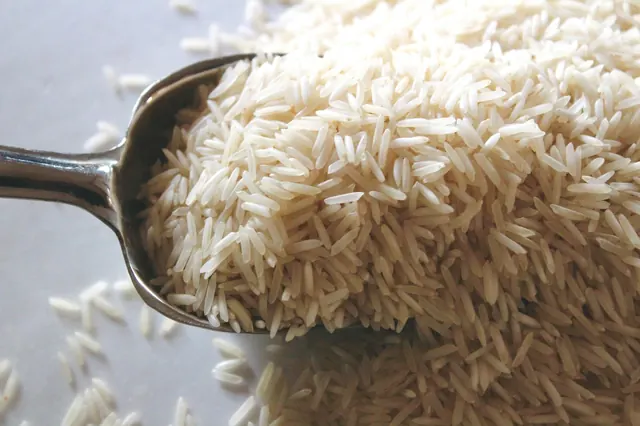 Problem guide · 6 min readIs the bulk size really cheaper? When the big bag losesThe big bag has the lower unit price, but you pay for the whole bag. Work out how much you must use for it to win, and spot sales and multi-packs that flip it.Read the guide
The whole job
Systems that use this tool
This tool is one part of a finished routine. The system page puts it in order with the other steps.
 SystemRotations · 8 steps · free printableThe four-night theme rotation: one dinner card for the whole seasonFour theme nights, two to four dinners you already make under each, three open nights and one standing grocery list. Set it up once, reuse it all season.Open the system
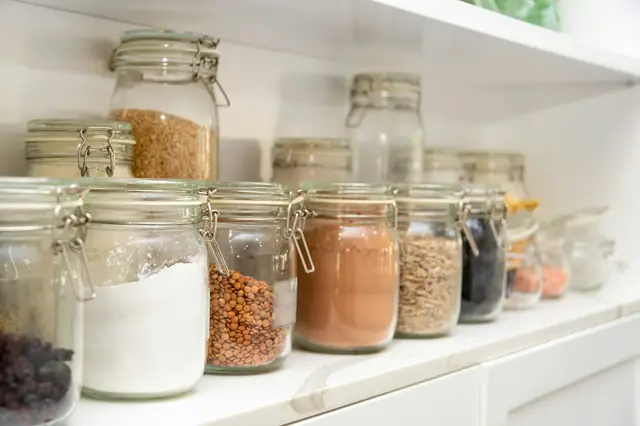 SystemShopping and budget · 7 steps · free printableShop your own shelves before the storeWrite the week's list, check the pantry, fridge and freezer against it, and buy only the gap in whole packages, grouped by aisle. Free printable check list.Open the system
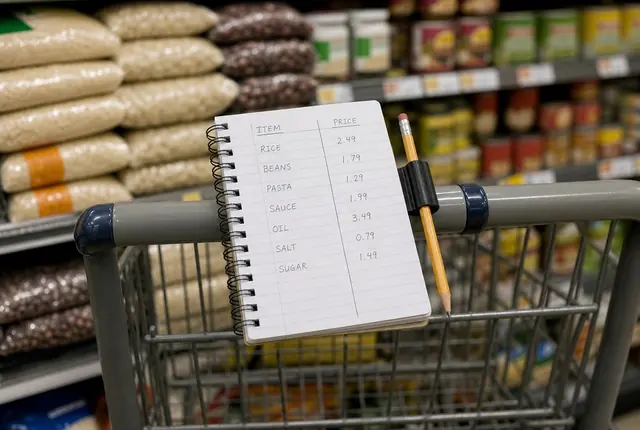 SystemShopping and budget · 7 steps · free printableThe grocery price book: know a good price before you reach the shelfWrite down the unit price of your 20 most-bought groceries for four weeks, circle the lowest, and stock up only when a tag matches it. Free printable page.Open the system
Keep planning
Related tools
- GroceryPantry-first grocery listList what the week's dinners need, enter what's already on the shelf, and get a store list of only the gap, rounded up to whole packages.Open the tool
- FreezerFreezer inventory and labelsList what's in the freezer, see it sorted oldest first, count how many dinners the cooked dishes cover, and print an inventory sheet with labels.Open the tool
- GroceryPrice per unit calculatorCompare grocery prices by the ounce, pound, fluid ounce or item, including multi-packs and 2-for deals, then print a price book page.Open the tool
Checked and dated
Sources
- FoodKeeper App, FoodSafety.gov (USDA Food Safety and Inspection Service). Checked October 6, 2026.
See every source on the site on the sources page. Spotted an error? Tell us.