System · Rotations
The four-night theme rotation: one dinner card for the whole season
Quick answer
Pick four nights that look the same most weeks and give each one a dish type: pasta, tacos or rice bowls, soup, a sheet-pan dinner. Under each, list two to four dinners your household already eats, and move every theme night on to its next dinner each week. The other three nights take leftovers, an easy dinner or nothing planned. Write one standing grocery list from the card, review it once a month and change the themes with the season. Utah State University Extension suggests a cycle of two to four weeks.
Source: Meal Planning 101, Utah State University Extension, checked October 12, 2026.
- 4 + 3four theme nights, three open nights for leftovers, an easy dinner and the unexpected
- 2 to 4 weeksthe cycle length Utah State University Extension suggests before a menu repeats
- 11 dinnerson our example card: 3 pasta, 2 tacos or bowls, 4 soups and 2 sheet-pan dinners
- 12 weeksbefore that whole card repeats, since uneven counts only line up at their least common multiple
Source: Meal Planning 101, Utah State University Extension, checked October 12, 2026.
Part 1
The decision first
Do it yourself
Set up a rotation
Most weeks look alike, you already make about eight to sixteen dinners the household eats, and deciding what's for dinner is the job nobody wants.
Skip it
Skip it for now
Your schedule changes completely from week to week, or you cook only once or twice a week. Plan week by week with the weekly dinner system and come back when the weeks settle.
Get help
Get help instead
Medical diets, food allergies and feeding concerns need a registered dietitian or your doctor. This system plans dish types and shopping, not what anyone should eat.
Part 2
The steps, in order
List the dinners you already make
Write down every dinner your household ate in the last few weeks and would eat again. Four theme nights with two to four dinners each need eight to sixteen, so this list is most of the work.
Have readyTwo weeks of receipts or a notebookEveryone's favorites
Pick four steady nights
Choose the four nights that look the same most weeks. Put the quickest dish type on the busiest of them. The other three nights stay open on purpose.
Have readyThe family calendar
Sort the list into four dish types
Group the dinners under types wide enough to hold several: pasta, tacos or rice bowls, soup or stew, sheet-pan, stir-fry, breakfast for dinner. A type with only one dinner under it will repeat every week, so pick another type or add a second dinner.
Have readyThe list from step 1
Set the counts and build the card
Two to four dinners per theme. Equal counts give a short cycle: three each repeats every three weeks, inside the two to four weeks USU Extension suggests. Uneven counts give a longer card in which each dinner still comes back every 14 to 28 days. The four-night rotation builder lays out the weeks and prints the card.
Have readyThe four-night rotation builder
Source: Meal Planning 101, Utah State University Extension, checked October 12, 2026.
Give the open nights a job
An open night right after a theme night takes its leftovers, so cook that theme for twice the people. Another can be an assemble night, and one stays free. The weekly dinner plan sorts nights by job, and leftover nights without the groans covers night two.
Have readyThe week sheet
Write one standing grocery list
For each theme, list the parts it needs every time (tortillas, pasta, broth, a sheet-pan protein) and set a keep-on-hand level for the shelf items in the pantry inventory. Each week, add only that week's version items and check the shelf with the pantry-first grocery list.
Have readyThe cardA pantry inventory sheet
Post it and cross off a row a week
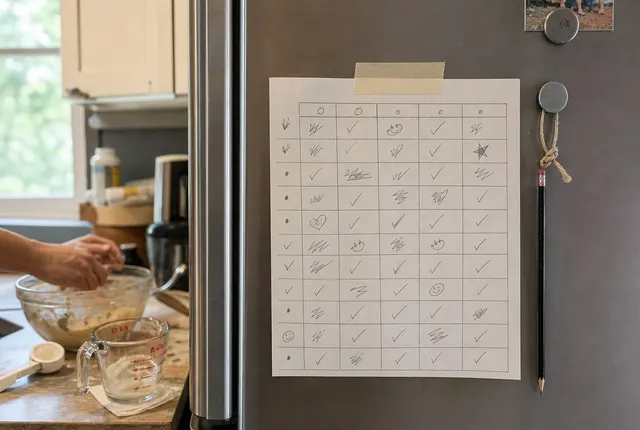
Tape the card to the fridge. When a week is done, cross off its row, so nobody has to remember which taco night came last.
Have readyThe printed cardA pen
Review monthly, change with the seasons
Once a month, swap the least-liked dinner for a new one and keep the theme. When the weather turns, change a whole theme on the same night: soup Thursday can become salad-bowl Thursday for summer. USU Extension suggests changing cycle menus with the seasons.
Have readyThe cardA pencil
Source: Meal Planning 101, Utah State University Extension, checked October 12, 2026.
Figure
The tools in this system
Let the tools do the arithmetic
- PlanFour-night rotation builderPin four theme nights to fixed days, list your own versions of each, and print a rotation card that shows when every dinner comes back.Open the tool
- PlanWeekly dinner plan generatorPlan seven dinners as cook, leftover, assemble and flex nights, rotate four dish types, and print the week with a grocery list by store section.Open the tool
- GroceryPantry-first grocery listList what the week's dinners need, enter what's already on the shelf, and get a store list of only the gap, rounded up to whole packages.Open the tool
- FreezerPantry inventory and restock listCount the pantry shelf by shelf, set a restock point and a full level for each staple, and print the inventory with a restock list sorted by zone.Open the tool
Part 3
What goes wrong
What happens when you skip a step, and how to catch it.
A theme that is really one recipe
Taco Tuesday with the same tacos every week brings the same dinner back every 7 days, and the theme wears thin within a few weeks.
A theme on every night
Seven themes leave nowhere to put leftovers, a late practice or a night out. One busy evening knocks the whole card out of order.
New recipes on the card
A card full of dinners nobody has made yet turns every theme night into a project. Start with what you know and add one new dinner a month.
No standing list
If the card doesn't carry a grocery list, you still build the list from nothing every week and the rotation saves you very little time.
A card that never changes
A card built around winter dinners doesn't fit July, and people stop following it. The monthly swap and the seasonal change keep the card current.
Part 4
Variants that change the steps
One or two people
Run three theme nights instead of four and cook each for four servings. Every theme night then covers the open night after it, and the card still needs only six to twelve dinners.
Family with activity nights
Put the fastest theme, like tacos, bowls or breakfast for dinner, on practice night, and make the night after a big game a leftover night.
Mixed tastes
Let each person own one version under a theme, so everyone gets their pick on a known week. Dinners when nobody agrees has more on splitting the choices.
Shifts that move every week
Keep the order of the themes and drop the fixed days: the next theme goes on the next night you can cook, and the open nights fill in around it.
Figure
From the kitchen table
Tips and tricks
Write the dish type in pen and the versions in pencil. The theme stays put; the dinners under it change.
Keep a waiting list at the bottom of the card. When the monthly swap comes, the new dinner is already picked.
Give a theme with a long cooking time to the weekend night, and keep the weeknight themes to things you can make fast.
Count the items each theme needs every time. Those are your standing list and your keep-on-hand staples, so the weekly list shrinks to the version items.
Thanksgiving is Thursday, November 26, 2026. Mark that week as a break on the card and pick the rotation back up the week after.
Recommendation
What we would do
Start with three dinners under every theme, all of them dinners you already make, so the card repeats every three weeks. Run it for a month before changing anything. Then swap the dinner that got the fewest votes, and only after that add a fourth version where people want more variety.
Part 6 · Free, one page, US Letter
Print the working copy
Theme rotation card
- Four theme nights
- The card: cross off a row a week
- Standing list
- Monthly review
Planned for the store: the full Theme Rotation Kit, a binder of theme setup: four nights, dish types, two to four versions each, twelve-week rotation card with open nights and a done column, standing grocery list and keep-on-hand levels per theme, monthly review log: swaps, waiting list, votes, three-night card for one or two people, summer and winter theme swaps.
Part 5
The primary source
Meal Planning 101: quick tips (Create Better Health, week 2 handout)
Utah State University Extension, Create Better Health (SNAP-Ed), published July 26, 2016. Checked October 12, 2026.
Utah State University Extension's Meal Planning 101 handout suggests planning a two to four week cycle menu, repeating it when the cycle ends, changing it with the seasons and adding theme nights. This system puts those lines on a printable card. We read the handout on October 10, 2026.
Asked often
Questions
What is a dinner rotation?
A fixed list of dinners that repeats on a cycle, so the menu gets planned once instead of every week. A theme rotation adds a dish type to each night, like pasta on Monday, and moves through a few versions of it.
How long should a meal rotation be?
Utah State University Extension suggests a cycle of two to four weeks before it repeats. With three versions under each of four themes, the card repeats every three weeks.
Source: Meal Planning 101, Utah State University Extension, checked October 12, 2026.
How many theme nights should we have?
Four works for most households. It takes away most of the nightly question and leaves three nights for leftovers, an easy dinner and anything that comes up. One or two people can start with three.
Won't we get bored eating the same dinners?
Each dinner comes back every two to four weeks, not every week, and the monthly swap adds a new one. If a theme starts to drag, give it another version before you drop it.
Does a rotation make grocery shopping easier?
Yes, if you write the standing list. Each theme needs the same base items every time, so those become pantry staples and the weekly list only carries the version items.
Read next
Guides in this system
 Know-how explainer · 6 min readTheme nights that actually last: four dish types instead of seven recipesTaco Tuesday wears thin by week three when it's always one taco. Pick four wide dish types, give each a few versions and rotate them weekly.Read the guide
 Problem-solving guide · 6 min readLeftover nights without the groans: how a double batch turns into a different dinnerNobody wants the same plate two nights running. Cook the base plain, split it before the sauce, and turn the second half into a different dinner.Read the guide
 Problem-solving guide · 6 min readHow to plan a week of dinners when nobody agreesSettle the weekly dinner argument: find the overlap, give each night a job, take turns picking, and keep a flex night. Printable agreement sheet included.Read the guide
 Know-how explainer · 6 min readMeal planning for beginners: your first week in 20 minutesNew to meal planning? Plan one week of dinners in 20 minutes: check the calendar, look in the fridge, give each night a job and write one grocery list.Read the guide
Checked and dated
Sources
- Meal Planning 101: quick tips (Create Better Health, week 2 handout), Utah State University Extension, Create Better Health (SNAP-Ed). Checked October 12, 2026.
Planning and arithmetic only, not nutrition, dietary, food-safety or financial advice. See every source on the sources page. Spotted an error? Tell us.