Grocery · Know-how
Bulk at the register vs per month: why the cart costs more and the month costs less
Quick answer
The register charges for whole packages: packages × price. A month only uses part of a bulk package: price per unit × what you use. In the store comparison worksheet's example, the warehouse club cart rings up $86.95 in month one, while what the household uses that month costs $52.70 at club prices. The other $34.25 is rice, oil, cheese and canned tomatoes still on the shelf. The discount grocer rings up $64.37 for a month's use of $57.18. Over six months the club register swings from $33.99 to $86.95 a month.
Source: no outside figures in this answer.
- $86.95club register in month one, for a month's use of $52.70
- $34.25of that first cart still on the shelf at month's end
- $33.99 to $86.95what the club cart rings up month to month over six months
- $4.48a month the club is cheaper for what's used, before its $5.00 monthly fee share
The cause
Why it happens
A receipt and a monthly cost answer different questions. The receipt says what left your account today. The monthly cost says what the food you ate cost.
Bulk packages outlast the month
The club sells rice in a 25 lb sack. At 5 lb a month, one sack covers five months. Month one pays for all of it; months two to five pay nothing for rice.
Small packages match the month
At the discount grocer, rice comes in 2 lb bags. Three bags cover a month with 1 lb to spare. The receipt and the monthly cost stay close every month.
Some months stack up
Each bulk item runs out on its own schedule. In month four of the example, the olive oil and a second case of tomatoes come due together, and the register jumps again.
Budgets read the register
A monthly tracker adds up receipts, so a bulk month looks over budget and the months after look under. Neither tells you which store is cheaper.
Figure
The fix
Step by step
Know which number you're looking at
Register = packages × price. Monthly cost = price per unit × what you use in a month. The store comparison worksheet shows the monthly cost for each item at each store, and its shopping list shows the register total and what each package leaves for next month.
Find the items with stock left over
In the example, the club's first cart leaves 20 lb of rice ($15.19 at club prices), 4 cans of tomatoes ($4.99), half a pound of cheese ($2.10) and about 50.6 fl oz of olive oil ($11.97). Together that's $34.25, the gap between $86.95 and $52.70.
Count how long each one lasts
Rice: 25 lb ÷ 5 lb a month = 5 months. Olive oil: a 2 liter bottle is about 67.6 fl oz, and at 17 fl oz a month that's just under 4 months. Write the month each one runs out on the pantry inventory.
Source: NIST Handbook 44 (2026), Appendix C, checked October 10, 2026.
Compare stores on the monthly cost
Per month, the club costs $52.70 for what the household uses and the grocer $57.18, so the club is $4.48 cheaper. Add the club's $60 fee as $5.00 a month and it's $57.70 against $57.18. The register totals never show this.
Budget on the register
On the monthly grocery tracker, month one at the club runs $34.25 above the month's use and month five $18.71 below it. Six months come to $341.33 at the register against $316.20 of food used; about $25 is still in the pantry.
Plan the big months
When a bulk month is coming, note it on the tracker before you shop. In the example, months one, four and six are the heavy ones. Spreading the big buys so they don't land together smooths the receipts without changing the monthly cost.
At a glance
The worksheet example's eight shared items, bought as needed each month
| Month | Club register | Bulk items bought | Grocer register |
|---|---|---|---|
| 1 | $86.95 | rice, olive oil, 2 cases of tomatoes, cheese | $64.37 |
| 2 | $44.48 | 1 case of tomatoes, cheese | $55.89 |
| 3 | $44.48 | 1 case of tomatoes, cheese | $58.38 |
| 4 | $67.96 | olive oil, 2 cases of tomatoes, cheese | $55.89 |
| 5 | $33.99 | 1 case of tomatoes | $58.38 |
| 6 | $63.47 | rice, 1 case of tomatoes, cheese | $55.89 |
| Six months | $341.33 | use × 6 = $316.20 | $348.80 |
The worksheet example's eight shared items, bought as needed each month (sample prices, club fee not included)
From the kitchen table
Tips and tricks
On a big receipt, circle the bulk items. Next month you'll know why the total dropped.
Write the month a bulk item should run out on the package. If it's still half full by then, you bought more than you use.
Read the worksheet's shopping list before you buy. It notes how much of each package is left for next month, so you can see which items carry over.
If the register is what's tight, buy the smaller package this month. The monthly cost goes up a little; the receipt goes down a lot.
Let the tool do the arithmetic
Store comparison worksheet
Price your monthly staples at up to three stores and see the cheapest store, the cheapest way to split the list, and whether a club fee pays off.
Open the store comparison worksheetPrintable store comparison worksheet
Figure
Recommendation
What we'd do
Pick stores by the monthly cost, plus any fee share, and budget by the register. Keep a short list of bulk items with the month each one runs out, so the big receipts aren't a surprise. Numbers only, not advice.
Stock on the shelf only counts if you use it
The monthly cost assumes the whole package gets used. If part of a bulk bag goes to waste, that share belongs on the month you bought it. Our is bulk really cheaper guide works out the break-even.
Register vs month check
- Register total and month's use written for each store
- Bulk items on the receipt circled
- Stock left after this month written for each bulk item
- Month each bulk item runs out noted
- Stores compared on monthly cost plus fee share
- Bulk months marked ahead on the monthly tracker
- Big buys spread so they don't all come due together
- Half-used bulk packages checked at the run-out month
Weeknight Plan · weeknightplan.com/grocery/guides/bulk-at-the-register/
Asked often
Questions
Why is my grocery bill higher at the warehouse club if it's cheaper?
Because the register charges for the whole package and you only use part of it this month. In our example the club cart is $86.95 in month one, but the month's use is $52.70. The rest is food for later months.
Which number should I use to compare stores?
The monthly cost of what you use, plus a month's share of any membership fee. That's what the store comparison worksheet ranks.
Which number goes on my budget?
The register. It's what you paid that month. Expect bulk months to run high and the next ones low.
Is the bulk size always cheaper per unit?
No. In the worksheet's example, the club's eggs, milk, canned tomatoes and bananas cost more per unit than the discount grocer's. Compare per unit item by item with the price per unit calculator.
Does this cover how long bulk food keeps?
No. We only count amounts and money. For how long pantry and fridge items keep, see USDA FoodKeeper.
Do the math
Tools for this
- GroceryStore comparison worksheetPrice your monthly staples at up to three stores and see the cheapest store, the cheapest way to split the list, and whether a club fee pays off.Open the tool
- GroceryMonthly grocery trackerLog each grocery receipt, keep non-food items apart, and see what's left per day and per week. Weekly checkpoints and a printable receipt log.Open the tool
- GroceryPrice per unit calculatorCompare grocery prices by the ounce, pound, fluid ounce or item, including multi-packs and 2-for deals, then print a price book page.Open the tool
- FreezerPantry inventory and restock listCount the pantry shelf by shelf, set a restock point and a full level for each staple, and print the inventory with a restock list sorted by zone.Open the tool
Keep reading
More guides
 Know-how · 5 min readWhy recipes say 350 °F and 180 °C when they aren't equal350 °F is 176.7 °C and 180 °C is 356 °F. Recipes round each to a number the dial shows. The exact math, the rounding steps, and a card of common pairs.Read the guide
 Know-how · 5 min readPan swaps: will a 9 x 13 recipe fit two 8 x 8 pans?Yes, with room to spare. Compare pan areas to see how deep the batter sits in two 8 x 8s, two rounds or one 9 x 9, and print a pan-area card for the drawer.Read the guide
 Know-how · 5 min readWhat size container for one dinner? Measuring a batch in cupsMeasure the batch in cups once, divide by the servings and multiply by the people at your table. That gives cups per dinner, and the container size follows.Read the guide
 Problem-solving guide · 5 min readRecipes for 4, dinner for 2: why you end up cooking every nightTwo people who both pack lunch eat a recipe for 4 in two meals, so the week needs a cook night almost every day. Double batches halve the count.Read the guide
 Know-how · 5 min readWhy a cup of flour weighs less than a cup of sugarA cup measures space, not weight. See what a cup of flour, sugar, butter, honey and oats weighs in USDA data, and how to switch a recipe to grams.Read the guide
 Problem-solving guide · 6 min readHome at 6, dinner at 6:30: how to match each dinner to the night that has time for itA 60-minute dinner on a 30-minute night runs late. Measure each night's window, add up what each dinner needs, and swap the ones that don't fit.Read the guide
 Problem-solving guide · 6 min readHow to plan a week of dinners when nobody agreesSettle the weekly dinner argument: find the overlap, give each night a job, take turns picking, and keep a flex night. Printable agreement sheet included.Read the guide
 Problem-solving guide · 6 min readDoubling a recipe for a crowd: the shopping-list sideFeeding 12 from a recipe for 4? Scale every line, total each ingredient across dishes, subtract the pantry and round up to packages once. Chart included.Read the guide
 Problem-solving guide · 6 min readFive dinners from one grocery trip: how to plan the week so the list holdsCook three nights, eat five: double two bases, put the fresh dinners first and the pantry ones last, and keep one shelf dinner as the backup.Read the guide
 Practical note · 5 min readFreezer prep day with two cooks: when a helper saves timeA second cook doesn't always end a freezer prep day sooner. What the planner's example shows about slow cookers, the oven and splitting the work.Read the guide
 Practical note · 4 min readA freezer stash for one: how many single portions keep a week runningCount freezer portions in and out each week. A normal week for one adds 1, a busy week takes 3, and 3 on hand covers the busy week when it comes.Read the guide
 Practical note · 5 min readThe fridge door map: a two-minute leftover check before you shopBefore you write the grocery list, count what's cooked in the fridge as servings and match it to the meals ahead. One dinner often drops off the list.Read the guide
 Know-how · 4 min readGroceries for one: why the USDA per-person figure is 20 percent higher, and what it means in dollarsUSDA food plan costs are for one person in a family of four. Living alone, add 20 percent. See the August 2026 figures for adults, weekly and monthly.Read the guide
 Problem-solving guide · 6 min readGrocery bill keeps creeping up: a weekly routine that worksWhy grocery totals drift up week after week, and a short weekly routine to catch it: plan dinners, shop the pantry, buy from one list, log the receipt.Read the guide
 Problem-solving guide · 6 min readHow to halve a recipe when the amounts get awkwardHalf of 1/3 cup, half of 3 eggs, half a can: turn each awkward amount into spoons you own. Includes a halving chart for the cupboard door.Read the guide
 Know-how · 5 min readHalve the recipe or freeze half: the cook-night math for oneCooking for one from recipes for 4: half recipes need twice the cook nights, whole ones need freezer space. Count both for your week and pick per recipe.Read the guide
 Problem-solving guide · 6 min readThe ham comes out at 2:15 for a 4:00 dinner: fixing a one-oven clashYour timeline pulls the main dish out hours early because a side needs another oven setting. See four fixes and how much each one changes the timing.Read the guide
 Know-how · 5 min readHands-on vs hands-off minutes: why a 15-minute sheet-pan dinner takes 45A recipe's prep time is only the hands-on part. Dinner also waits for the oven. How to count both, when they overlap, and which one fills your evening.Read the guide
 Problem-solving guide · 6 min readWe invited 80 to the open house. How many will come?A drop-in party never brings everyone you invite. See how the 60% planning rule turns 80 invitations into food for 48, and what it changes on each dish.Read the guide
 Problem guide · 5 min readHow much can my freezer take in one prep day?Multiply your freezer's cubic feet by 2 to 3 lb to see how much food can go in on one prep day, and which meals should wait for a second day.Read the guide
 Problem-solving guide · 6 min readHow much shredded chicken for a week of dinners: count servings, not poundsBuying 2 lb per dinner leaves a tub of chicken nobody eats. Count servings for each dinner, add them up, then round the recipe up by half batches.Read the guide
 Problem guide · 6 min readIs the bulk size really cheaper? When the big bag losesThe big bag has the lower unit price, but you pay for the whole bag. Work out how much you must use for it to win, and spot sales and multi-packs that flip it.Read the guide
 Problem-solving guide · 6 min readIs packing lunch cheaper than buying school lunch?Set the food a packed lunch uses against your school's price. A worked week: $2.18 a packed lunch vs $3.25 at school, and how snack packs shrink the gap.Read the guide
 Problem-solving guide · 6 min readIs the warehouse club membership paying for itself? A fee check from your own receiptsCheck a warehouse club fee against your real list: price what you use each month at the club and at the store you'd shop instead, then multiply by 12.Read the guide
 Problem-solving guide · 6 min readLeftover nights without the groans: how a double batch turns into a different dinnerNobody wants the same plate two nights running. Cook the base plain, split it before the sauce, and turn the second half into a different dinner.Read the guide
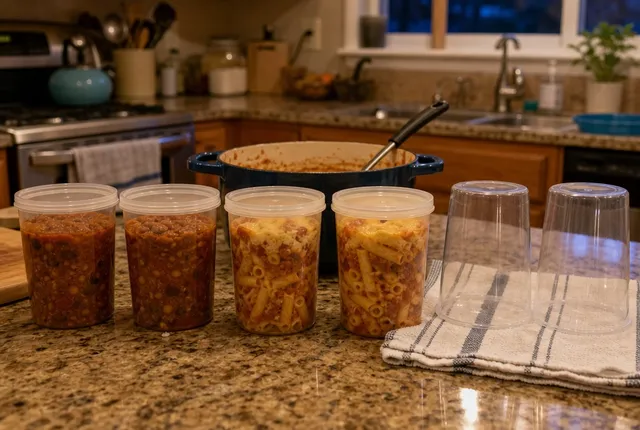 Problem-solving guide · 6 min readLeftovers for lunch all week: how much to cook, and how many containers two people needTwo people packing weekday lunches need 10 servings. Cook each dinner for the table plus the lunches until the next cook night, and keep about 6 containers.Read the guide
 Know-how explainer · 6 min readMeal planning for beginners: your first week in 20 minutesNew to meal planning? Plan one week of dinners in 20 minutes: check the calendar, look in the fridge, give each night a job and write one grocery list.Read the guide
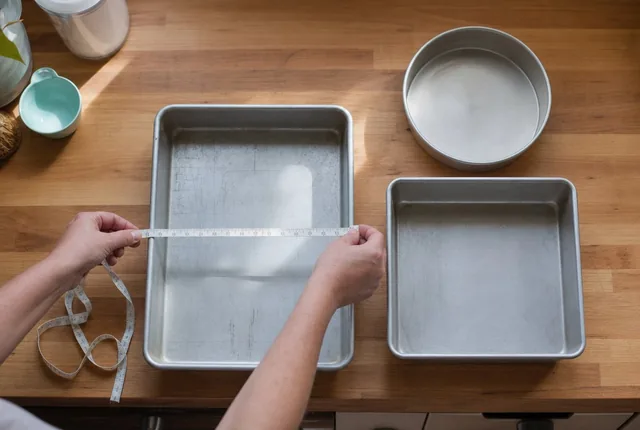 Practical note · 5 min readHow to measure a baking pan, and how much it holdsMeasure across the inside top edge, then the side height, then count cups of water to the rim. A worked 9 x 13, a table of common pans and a drawer card.Read the guide
 Know-how · 5 min readOne of you packs lunch: planning leftovers for twoDinner takes 2 servings and a lunch for one takes 1. Count servings, not meals, and see how far a double batch goes when one or both of you pack lunch.Read the guide
 Problem-solving guide · 6 min readOne oven, five dishes: plan the holiday oven backward from dinnerTwo dishes at different settings can't both come out at dinner time. Work backward from the table, group by setting, and see which dish moves and why.Read the guide
 Know-how · 5 min readOne grocery store or two: how to tell when a second stop is worth itA second store can shave dollars off the list, but it costs trips, minutes and miles. Work out the saving per stop, per mile and per hour, then decide.Read the guide
 Problem-solving guide · 6 min readOver the grocery budget by the 15th: what the pace line says and how to plan the rest of the monthHalfway through the month and already past the pace line? Find out whether it was one big trip or every trip, then work out a weekly figure for the days left.Read the guide
 Know-how · 5 min readPacked or loose? The recipe words that change a cup's weightPacked, sifted, chopped, shredded: each word changes what a cup weighs. USDA pairs for brown sugar, powdered sugar, nuts, raisins and cheese, in grams.Read the guide
 Know-how · 5 min readMy child buys lunch on pizza day. How do I plan the rest of the week?Untick the days a child buys at school and the lunch sheet recounts. What a part-week does to the shopping list, the leftovers and the week's lunch money.Read the guide
 Know-how · 5 min readDo paper towels count as groceries? How to keep non-food items apart on the receiptPaper towels, soap and trash bags ride on the grocery receipt but aren't food. How to split them off in a minute and why it changes the month's numbers.Read the guide
 Know-how · 5 min readPractice nights: planning leftovers and freezer dinners around the nights nobody cooksA night nobody can cook needs 4 servings ready for a family of four. See which leftovers reach that night and how many freezer portions to keep.Read the guide
 Know-how · 5 min readWhy the receipt and the cost per serving never matchA pot of chili costs $20.90 by the serving but $38.61 at the register. The gap is the part of each package the pot didn't use. Here's how to read both numbers.Read the guide
 Problem-solving guide · 5 min readA recipe for 4 is one dinner: why a family of four needs double batchesA recipe that serves 4 is tonight's dinner for a family of four and nothing more. See why leftovers need double batches, worked through a real week.Read the guide
 Know-how · 5 min readRound vs square pans: why a 9 inch round is about an 8 x 8A round pan's floor is 3.1416 × the radius squared, so a 9 inch round has 63.6 square inches and an 8 x 8 has 64. Swaps for 8, 9, 10 and 12 inch rounds.Read the guide
 Problem-solving guide · 5 min readTired of the same leftovers by Wednesday: a fix for cooking for oneA recipe for 4 is four meals of one dish when you cook for one. Set a repeat limit, freeze the rest, and let the freezer feed the second half of next week.Read the guide
 Practical note · 5 min readSame product, fair test: match sizes, brands and prices before you compare storesA store comparison is only as fair as its items. Match brand, cut, size and regular price first, or a $2 gap can look like $20. Printable checklist.Read the guide
 Practical note · 5 min readStarting a price book: what to write down for the first four weeksA price book lists what your regular groceries cost, by unit price. Here's what to record each week so that after a month you know a good price on sight.Read the guide
 Know-how explainer · 6 min readTheme nights that actually last: four dish types instead of seven recipesTaco Tuesday wears thin by week three when it's always one taco. Pick four wide dish types, give each a few versions and rotate them weekly.Read the guide
 Know-how · 6 min readThree dinners from one pot of beans that don't taste like the same dinnerCook the pot plain, then send each part in a different direction: one soupy, one mashed, one in a bowl. Plus how many cups to cook and how many cans that is.Read the guide
 Know-how · 5 min readTwo casseroles, one oven: ordering a freezer prep dayTwo casseroles at different oven settings make one of them wait. When that wait costs time on a freezer prep day, and the order that hides it.Read the guide
 Know-how · 6 min readTwo mains or one? Splitting the crowd between brisket and pulled porkTwo mains don't need twice the meat. Give each main a share of the guests, and 48 guests need 25 pounds, not 48. The pound check before and after.Read the guide
 Know-how · 5 min readUnit price: how to compare sizes in the store in 10 secondsRead the unit price on the shelf tag, fix mismatched units in your head, and spot when the bigger package loses. Includes a pocket card to print.Read the guide
 Know-how · 6 min readWhat the USDA Food Plans are, in plain wordsWhat the USDA low-cost, moderate-cost and liberal food plans measure, how to read the table for your household, and what the figures leave out.Read the guide
 Practical note · 5 min readWeigh, don't scoop: bake from one bowl on a kitchen scalePut one bowl on the scale, tare once, and weigh each ingredient in by its running total. A worked oat bar list, a fix for overshooting, and a printable card.Read the guide
 Know-how · 6 min readWhat to make the day before: prep ahead vs make ahead on the countdownMoving work to the day before only helps if you move the right jobs. See which dishes to prep ahead, which to make ahead, and what each does to the day.Read the guide
Checked and dated
Sources
- NIST Handbook 44, 2026 edition, Appendix C: General Tables of Units of Measurement, National Institute of Standards and Technology. Checked October 10, 2026.
Numbers only, not nutrition, dietary, food-safety or financial advice. See every source on the sources page. Spotted an error? Tell us.