Plan · Tool and printable
Meal plan for one: a week template that uses every serving
Quick answer
Cook only when the leftovers run out. A recipe for 4 gives one adult 4 meals: dinner that night, then lunches and a later dinner until it's gone or you've had it as many times as you want. In the worked example, three cook nights on Sunday, Tuesday and Friday cover all 11 meals of the week: 6 dinners at home and 5 weekday lunches. Two freezer portions fill the gaps, and three servings of Friday's pasta bake go into the freezer for next week.
Source: no outside figures. This tool works only from what you enter.
Try it
Filled in with the worked example below. Change any number and the result updates.
One adult, one week 3 cook nights cover all 11 meals: 6 dinners and 5 lunches.
- Cook on
- Sun, Tue and Fri
- Buy for
- 3 whole recipes
- From the freezer
- 2 portions
- Into the freezer
- 3 portions
The week
| Day | Lunch | Dinner |
|---|---|---|
| Sunday | no lunch planned | Cook Pot of chili |
| Monday | Leftovers Pot of chili | Leftovers Pot of chili |
| Tuesday | Leftovers Pot of chili | Cook Sheet-pan chicken and vegetables |
| Wednesday | Leftovers Sheet-pan chicken and vegetables | Leftovers Sheet-pan chicken and vegetables |
| Thursday | Leftovers Sheet-pan chicken and vegetables | Freezer one portion |
| Friday | Freezer one portion | Cook Pasta bake |
| Saturday | no lunch planned | Out |
Each recipe
| Dish | Cooked | Makes | Eaten | The rest |
|---|---|---|---|---|
| Pot of chili | Sunday | 4 servings | 2 dinners, 2 lunches | all eaten this week |
| Sheet-pan chicken and vegetables | Tuesday | 4 servings | 2 dinners, 2 lunches | all eaten this week |
| Pasta bake | Friday | 4 servings | 1 dinner | freeze 3 portions on Friday night (no meal left to fill this week) |
The same week with 1 to 5 cook nights
| Cook nights allowed | Used | Meals covered | Open | Into the freezer |
|---|---|---|---|---|
| 1 | 1 | 6 of 11 | 5 | 0 |
| 2 | 2 | 10 of 11 | 1 | 0 |
| 3(yours) | 3 | 11 of 11 | 0 | 3 |
| 4 | 3 | 11 of 11 | 0 | 3 |
| 5 | 3 | 11 of 11 | 0 | 3 |
Groceries for one cost more per person: the USDA Food Plans add 20% for a one-person household. The grocery budget calculator works out the figure for your age groups.
Step by step, no jargon
How to use this, in plain words
- 1
Look at the recipes you cook most and find the serving count, usually near the title. Type the most common one; many say 4.
- 2
Set each night: can cook, no cooking (late work, a class, the gym) or eating out. Pick the lunches you'd take from leftovers.
- 3
Decide how many times you'll eat one dish in a week before you're tired of it. Count the first dinner: 3 means dinner plus two leftover meals.
- 4
Count the single portions already in your freezer, and choose whether servings left at the end of the week get frozen.
- 5
Read the week, check the comparison table for one more or one fewer cook night, then print the week and stick it on the fridge.
Before you start
- Most recipes are written for 4. Halving works for many dishes, but whole recipes with planned leftovers usually waste less time.
- Set the repeat limit to what you'll really eat. If you'll only eat chili twice in a row, set 2 and let the freezer take the rest.
- Look up how long your leftovers keep in the USDA FoodKeeper app, then type that as leftover days. The tool doesn't supply the number.
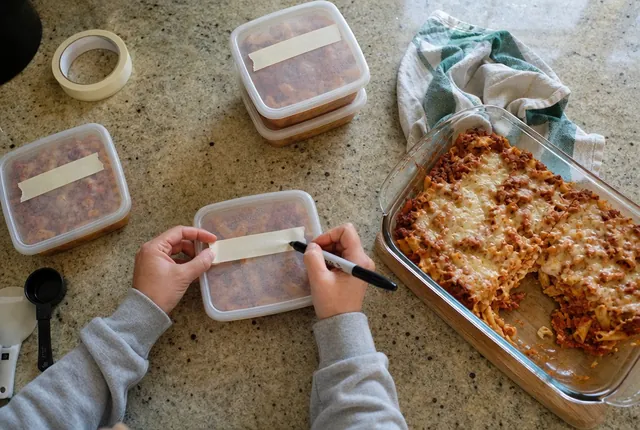
- Freeze extra servings as single portions in small containers, labeled with the dish and the date, so one portion is one meal later.
The method
How it works
- Meals to fill = dinners at home (seven minus nights out) + the lunches you take from leftovers.
- Each cook night makes the recipe's servings, or half of them for a half recipe. One meal for one adult is one serving.
- Go through the week in order, lunch before dinner. A meal takes the oldest leftover that was cooked on an earlier day, if you haven't hit your limit for that dish and it's inside your leftover days. If none fits and the night can cook, cook the next dish. If not, use a freezer portion. If none are left, the meal stays open.
- Whatever a dish has left at the end of the week goes into the freezer on the night it was cooked, one portion per serving. With the freezer off, it shows as extra.
- Freezer next week = portions on hand − portions used + portions put away.
- Grocery note: the USDA Food Plans figures are for one person in a household of four. For a one-person household they add 20 percent.
Source: USDA Food Plans, cost of food at three levels, August 2026, checked October 8, 2026.
Step by step
Worked example
One adult plans a week from Sunday. Their usual recipes serve 4, and they cook whole recipes on at most three nights. Weekday lunches come from leftovers. They'll eat one dish up to 4 times, counting the first dinner, and they have 2 single portions in the freezer. Thursday has a late meeting, so no cooking that night. Saturday they eat out. The dishes, in order: a pot of chili, sheet-pan chicken and vegetables, and a pasta bake.
- Meals to fill: 6 dinners at home + 5 weekday lunches = 11.
- One whole recipe serves 4, so each cook night makes 4 meals for one: dinner that night and 3 more.
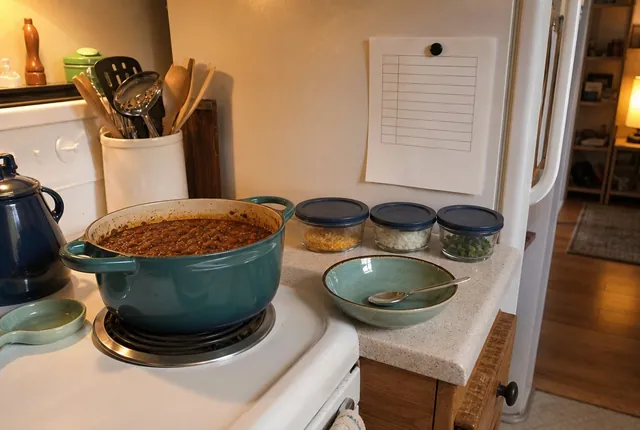
- Sunday: Pot of chili, 4 servings = 2 dinners + 2 lunches.
- Tuesday: Sheet-pan chicken and vegetables, 4 servings = 2 dinners + 2 lunches.
- Friday: Pasta bake, 4 servings = 1 dinner + 3 into the freezer.
- No leftover fits Thursday dinner and Friday lunch, and neither can be a cook night, so each takes a freezer portion: 2 on hand − 2 = 0, then + 3 put away this week = 3 for next week.
- Total: 4 + 4 + 1 from cooking + 2 from the freezer = 11 of 11 meals.
Figure
Put it on the fridge
What to record
Your household
Variants
Half recipes
Pick half recipes and a serves-4 recipe makes 2 meals: dinner and one lunch. You cook more often, but there are fewer repeats. The comparison table shows how many cook nights the week then needs.
No lunches from leftovers
Set lunches to none if you eat lunch at work. Each recipe then covers dinners only, and more of it goes into the freezer.
A freezer-first week
Start with a stocked freezer and set cook nights to 1 or 2. The plan uses frozen portions on the nights with no leftovers and shows how many you'll have left.
Two people or a family
This page is set for one adult. Cooking for two? A meal then takes one serving per person, so a recipe for 4 is only two meals. The meal plan for two plans dinners for two, lunches for one or both, and double batches. For a family of four, the meal plan for a family of four does the same with dinners for four.
Published figures
Numbers this tool uses
| Figure | Value | Source, date checked |
|---|---|---|
| Household-size adjustment, one person | +20 percent on the USDA Food Plans figures | USDA Food Plans, cost of food at three levels, August 2026, October 8, 2026 |
| USDA low-cost plan, woman 19 to 50, August 2026 | $63.60 a week for one person in a four-person household | USDA Food Plans, cost of food at three levels, August 2026, October 8, 2026 |
| USDA low-cost plan, man 19 to 50, August 2026 | $73.20 a week for one person in a four-person household | USDA Food Plans, cost of food at three levels, August 2026, October 8, 2026 |
| How long leftovers and frozen portions keep | Look it up in the FoodKeeper app (we don't restate it) | FoodKeeper App, FoodSafety.gov, October 6, 2026 |
Limitations
- Planning estimate; check the serving count on your own recipes and how much you really eat. A big appetite can turn a recipe for 4 into 3 meals.
- The plan assumes every serving is the same size, and it fills meals in order, oldest leftover first. Swap days by hand on the printed sheet if you want a different order.
- It plans servings only. It doesn't say how long leftovers or frozen portions keep. For that, use the USDA FoodKeeper app.
Checking the result
If the answer surprises you
Fewer cook nights than you allowed? The tool cooks only when no leftover fits. A spare cook night means the week didn't need it.
A lunch stays open right before a cook night? Lunch comes before dinner, so the day you cook, lunch can only come from older leftovers or the freezer.
The freezer count goes up even though you used some? Servings left at the end of the week go in, and they cover a busy night next week.
Asked often
Questions
How do you meal plan for one person?
Plan the leftovers on purpose. Cook a normal recipe for 4, eat it that night, and plan the other servings as lunches, a later dinner or freezer portions. Then cook again only when they run out. Three cook nights cover a whole week in the worked example.
Should I halve recipes when cooking for one?
You can, but a whole recipe usually saves more time. A half recipe for 4 makes 2 meals, so the week needs more cook nights. A whole one makes 4, and whatever you don't want this week goes into the freezer. Use the comparison table to see both.
How many times a week should one person cook?
It depends on the recipe size and how many repeats you'll eat. With recipes for 4, weekday lunches from leftovers and up to 4 meals of one dish, the example week needs 3 cook nights for 11 meals. The table under the result shows your week with 1 to 5.
Is it more expensive to cook for one?
Per person, usually yes. The USDA Food Plans figures are for one person in a four-person household, and they add 20 percent for a household of one. Buying for a full recipe and freezing the extra helps you use what you buy.
Source: USDA Food Plans, cost of food at three levels, August 2026, checked October 8, 2026.
How long do leftovers keep?
We don't give storage times. Look each dish up in the USDA FoodKeeper app, then type that number as leftover days so the plan only uses leftovers inside it.
Source: FoodKeeper App, FoodSafety.gov, checked October 6, 2026.
Read next
Guides that go deeper
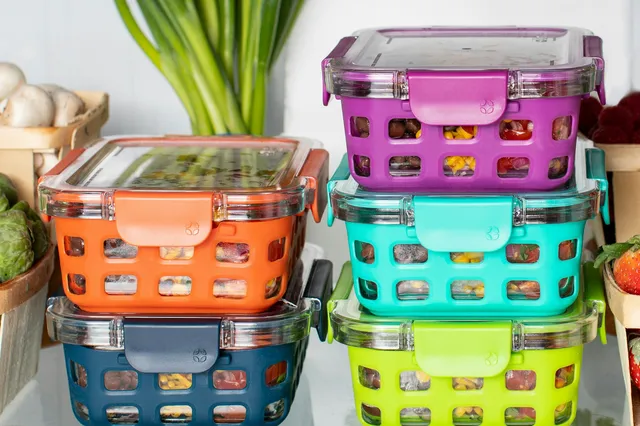 Practical note · 4 min readA freezer stash for one: how many single portions keep a week runningCount freezer portions in and out each week. A normal week for one adds 1, a busy week takes 3, and 3 on hand covers the busy week when it comes.Read the guide
 Know-how · 4 min readGroceries for one: why the USDA per-person figure is 20 percent higher, and what it means in dollarsUSDA food plan costs are for one person in a family of four. Living alone, add 20 percent. See the August 2026 figures for adults, weekly and monthly.Read the guide
 Problem-solving guide · 5 min readTired of the same leftovers by Wednesday: a fix for cooking for oneA recipe for 4 is four meals of one dish when you cook for one. Set a repeat limit, freeze the rest, and let the freezer feed the second half of next week.Read the guide
 Know-how · 5 min readHalve the recipe or freeze half: the cook-night math for oneCooking for one from recipes for 4: half recipes need twice the cook nights, whole ones need freezer space. Count both for your week and pick per recipe.Read the guide
 Know-how explainer · 6 min readMeal planning for beginners: your first week in 20 minutesNew to meal planning? Plan one week of dinners in 20 minutes: check the calendar, look in the fridge, give each night a job and write one grocery list.Read the guide
 Problem-solving guide · 6 min readHow to halve a recipe when the amounts get awkwardHalf of 1/3 cup, half of 3 eggs, half a can: turn each awkward amount into spoons you own. Includes a halving chart for the cupboard door.Read the guide
 Problem-solving guide · 6 min readLeftover nights without the groans: how a double batch turns into a different dinnerNobody wants the same plate two nights running. Cook the base plain, split it before the sauce, and turn the second half into a different dinner.Read the guide
 Know-how · 5 min readWhat size container for one dinner? Measuring a batch in cupsMeasure the batch in cups once, divide by the servings and multiply by the people at your table. That gives cups per dinner, and the container size follows.Read the guide
Keep planning
Related tools
- PlanMeal plan for a family of fourA recipe for 4 feeds a family of four once, with nothing left. Plan a week of double batches, dinners for four, lunches for two, and print the week sheet.Open the tool
- PlanMeal plan for twoA recipe for 4 is only two meals for two. Plan a week of dinners for two and lunches for one or both, cook double or whole, and print the week sheet.Open the tool
- PlanWeekly dinner plan generatorPlan seven dinners as cook, leftover, assemble and flex nights, rotate four dish types, and print the week with a grocery list by store section.Open the tool
- ScalePortion scaler with unit conversionScale a recipe up or down by servings or by pan size, see each amount in cups, tablespoons and grams, and print the scaled recipe card.Open the tool
- Cook onceLeftover route mapList what's cooked in your fridge and the lunches and leftover nights ahead. The map sends each serving to a meal, oldest first, and shows what's still open.Open the tool
- FreezerFreezer inventory and labelsList what's in the freezer, see it sorted oldest first, count how many dinners the cooked dishes cover, and print an inventory sheet with labels.Open the tool
- Cook onceCook once, eat three plannerPlan one base, like shredded chicken or a pot of beans, for three dinners: how many batches to make, what to buy, how to split it, plus a card and labels.Open the tool
Checked and dated
Sources
- Official USDA Food Plans: Cost of Food at Home at Three Levels, U.S. Average, August 2026, USDA Food and Nutrition Administration, Center for Nutrition Policy and Promotion. Checked October 8, 2026.
- FoodKeeper App, FoodSafety.gov (USDA Food Safety and Inspection Service). Checked October 6, 2026.
See every source on the site on the sources page. Spotted an error? Tell us.